
AppLand Score
'Carbon Copy' exhibits a strong melodic structure and arrangement that effectively conveys its thematic depth, while the production quality is exceptionally high, creating an immersive listening experience. Its originality shines through in its unique exploration of identity, although the hooks could be more memorable for an even greater emotional impact.
Release Intelligence
Moderate potential
Based on quality, listeners & playlists
25s engagement window · ideal for Reels & TikTok
Strong compositional structure. Production quality is excellent. Strong mix clarity. Highly original production. Intro detected — ensure it hooks listeners within 15 seconds for streaming.
About This Track
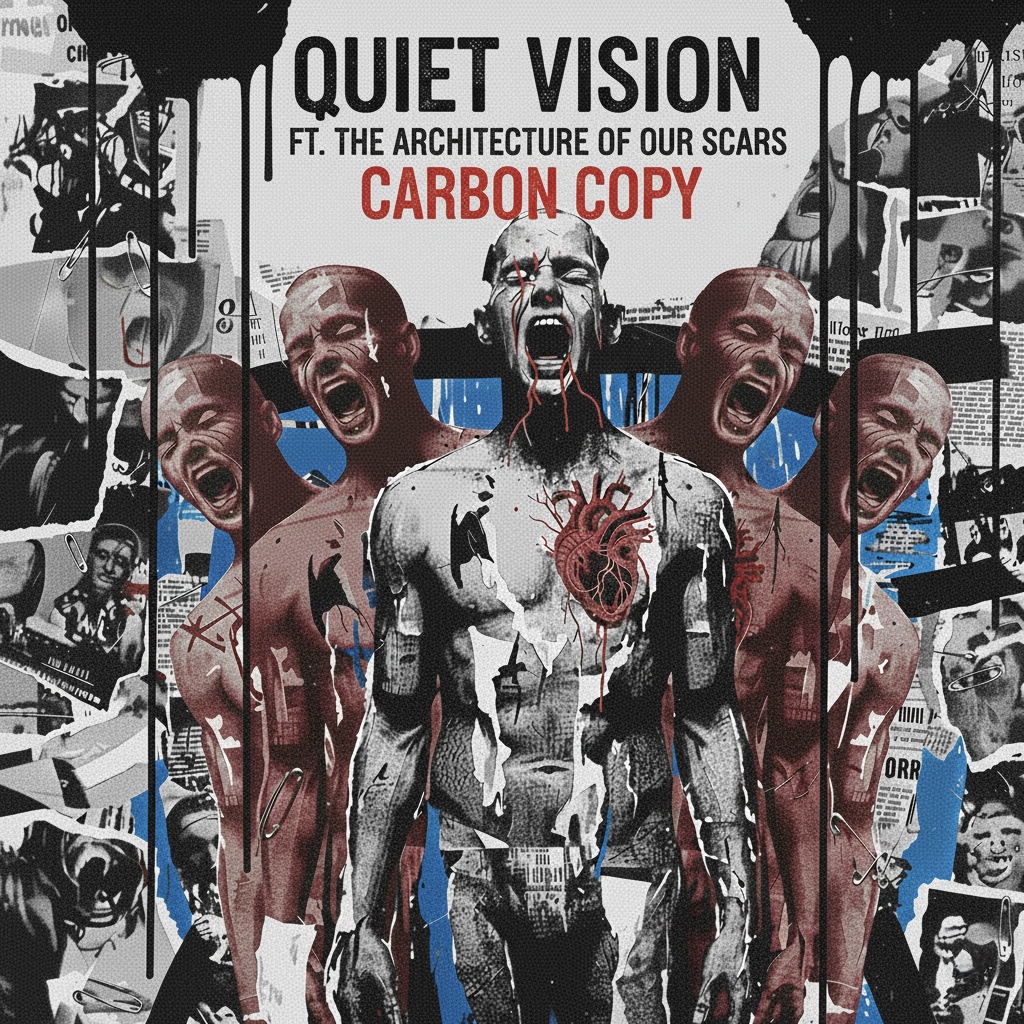
“Carbon Copy” marks the first collision between Quiet Vision and Florida’s The Architecture Of Our Scars in 2025, and it doesn’t feel like a simple collaboration—it feels like two worlds folding into each other under pressure. Built on a foundation of atmosphere and rupture, the track explores what happens when identity stops being something you own and becomes something you perform. From the opening lines, there’s a sense of self being peeled back, not to reveal something real underneath, but to expose emptiness—“peeling the skin to find a blank slate” isn’t rebirth, it’s erasure. The song moves like a confrontation with a mirror that doesn’t reflect who you are, only who you’ve been shaped to become, and the further it progresses, the more that reflection fractures. Quiet Vision’s production gives the track its emotional space—those ambient textures and clean melodic moments create the illusion of clarity, like a breath before the fall—while The Architecture Of Our Scars tear through it with raw, volatile energy. That push and pull is what defines “Carbon Copy.” It never settles. It builds, collapses, and rebuilds again, mirroring the instability of the identity it’s describing. The chorus opens up sonically, almost anthemic, but lyrically it lands like a realization you can’t undo: being “a ghost in a costume” isn’t just insecurity, it’s the acceptance that what you’re presenting to the world isn’t you anymore. It’s a version that’s been edited, approved, and repeated until the original is gone. As the track descends into its heavier sections, the tone shifts from introspection to rejection. The second verse feels mechanical, almost surgical, as if the process of becoming this “copy” is deliberate—stitched together, polished, perfected—but completely hollow. By the time it hits the breakdown, the song abandons subtlety entirely. It becomes a confrontation with everything external—society, expectation, pressure—and the scream of “I now trust no one” doesn’t feel like rebellion, it feels like the final stage of isolation. That moment, paired with the blunt demand to “give it back,” is the emotional core of the track: a desperate attempt to reclaim something that may not even exist anymore. The outro strips everything back again, but it doesn’t offer resolution. Instead, it leaves you with the same image the song began with—a ghost, still trapped in the costume, aware of it now, but unable to step out of it. That’s what “Carbon Copy” ultimately means. It’s not just about losing yourself—it’s about becoming something else so completely that you can’t trace your way back. As a first collaboration between Quiet Vision and The Architecture Of Our Scars, it sets the tone perfectly: cinematic, confrontational, and emotionally unrelenting, a track that doesn’t try to fix anything, only expose it.
Comments
(0)No comments yet. Be the first to share your thoughts!
Artist
The Architecture Of Our Scars
Created by 6fcbsfwm5x@privaterelay.appleid.com